

For many companies, the traditional bank transfer (or SEPA credit transfer) is perceived as a free payment solution: no commissions or fees are generally applied to transfers. But are they really cost-neutral? Nothing could be further from the truth.
Traditional bank transfers may appear to be free of charge, but there are hidden costs involved in processing them, which are often overlooked or underestimated. What impact do they have on your profitability? What alternative solutions are there?
Read all about it in this dedicated article.
The traditional bank transfer
In 2020, in France, bank transfers represented 4,483 million transactions for a total of 32,713 billion euros.
This means of payment is particularly well suited to high value payments. Widely used in BtoB (90% of payments by value), it is also offered as an alternative to cheques or bankcards in BtoC. Whether online, at a distance or in-store, it can be used to pay for large baskets, which are often the source of payment failures due to bankcard ceilings.
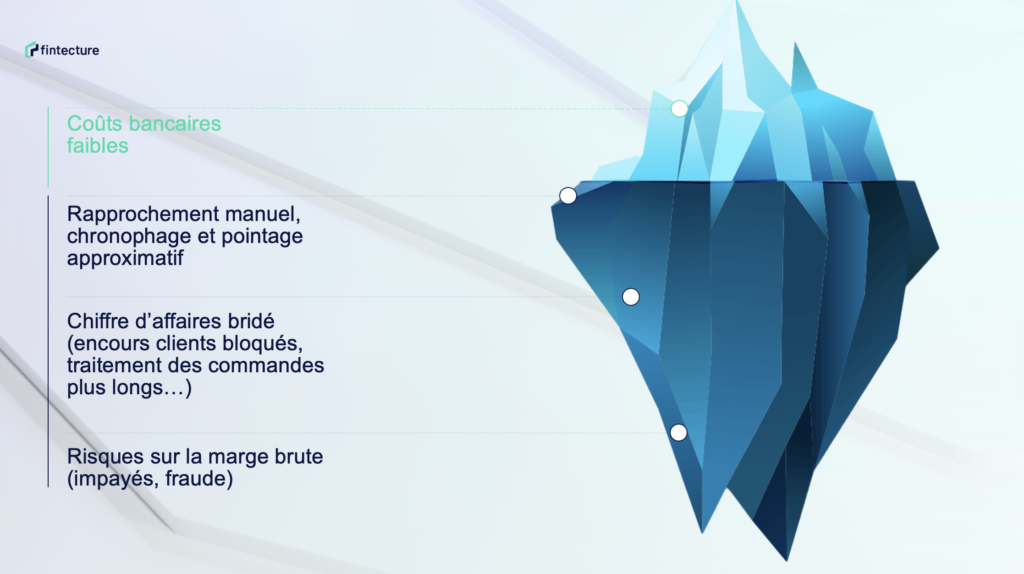
But the traditional bank transfer is not as free as it seems. It conceals a number of hidden costs, linked in particular to the human and manual processing involved.
Time-consuming and tedious processing of transfers
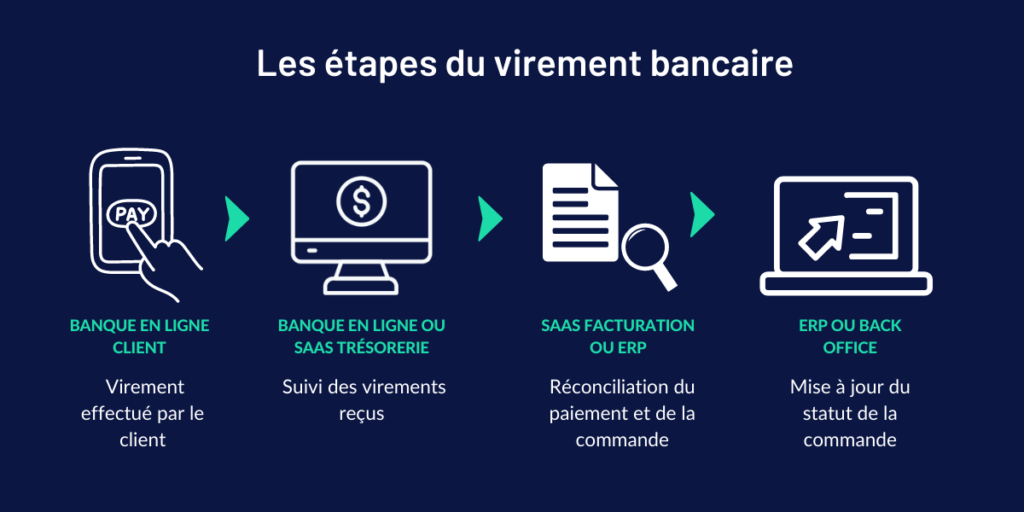
There are several steps involved in collecting a wire transfer. Each step may involve one or more people in different departments.
- To enable your customers to pay you by bank transfer, you need to send them your bank details, which they then need to register in their online bank. Adding a new beneficiary is not instantaneous, and a validation period is often necessary. Depending on the bank, this can take up to 72 hours.
- Once the customer has made the transfer, you need to monitor your bank accounts to check that you have received the payment. Some customers will send you a screenshot to confirm that the transfer has gone through. However, as a standard bank transfer is revocable, it's safer to check for yourself that you've been credited.
- Once the transfer is received, you must find the corresponding order from the elements present in the detail of the operations: the date, the value and the reference of the transfer. If you are lucky, your customer will have specified the order reference in the object of the transfer. If not, identification can become a real headache. Indeed, these "mystery transfers" generate a lot of back and forth between the accounting department, the sales department and the customers. These time-consuming processes slow down the proper execution of the service. If there is a problem with the payment (error on the amount, delay...), the time spent is even more important!
- Once the transfer has been identified, your accounting teams perform the reconciliations and modify the status of the order in your ERP or in the back-office of your site. Most of the time, this operation is manual and requires the use of different interfaces. Once these operations are completed, you can launch the preparation of the order (for a product) or allow your customer to access the service (for a service).
The hidden costs of bank transfers
Ultimately, the processing of a traditional bank transfer is similar to that of a check. Despite the digitalization of the operation, it is accompanied by numerous manual tasks that are not without consequences for you and your teams:
A major human cost
Taken together, all these processes are costly in terms of manpower and time. Have you done the math yet? Estimate the time spent by your teams on each transfer (accounting, sales, sales, etc.). Then multiply it by their loaded salaries and by the number of bank transfers you process.
A risk of error
Manual processing means the risk of error. Errors can come from your customers, for example, if they enter the wrong amount. In this case, you'll need to follow up any late or incomplete payments. In the event of overpayment, you'll have to issue a credit note or offer a refund. Then it's up to you to get their bank details and make the transfer!
Lower productivity
Another underestimated point is that the steps described above interrupt your teams' day-to-day activities, thereby reducing their productivity. Broken down, they may take 2, 5, 10 or 15 minutes. But they interrupt your teams in their daily work. It's difficult to group them together at the end of the day or once a week, because order processing (and therefore customer satisfaction) depends on your responsiveness. Although it's difficult to estimate the cost of these "interruptions", you should nevertheless consider the impact of transfers on your organization.
Processing times impact your cash flow
Most bank transfer payments are not immediate. Delays in collection increase your DSO (Days Sales Outstanding) and impact your cash flow requirements. These cash management issues are not neutral, especially for companies with high levels of working capital. Financing working capital is sometimes necessary, but it comes at a cost.
We invite you to read our article dedicated to this subject.
A degraded customer experience
When customers wish to pay by bank transfer, they have to go through their online bank. This interrupts their purchasing experience. This disruption can have an impact on sales, particularly in the case of online sales. A drop in the conversion rate has a real impact on your sales and customer acquisition costs.
We can't stress this enough: whatever your target or activity, the customer experience is key! If you work in the B2B sector, don't neglect your customer journey. Indeed, 83% of BtoB buyers prefer the online channel for their orders, and 2/3 of them say they are disappointed by the online ordering experience (source: Fevad).
Blocked customer outstandings
If you work with a professional clientele, you probably offer outstanding amounts to your customers. They pay you within 30 or 60 days, usually by bank transfer. However, the time it takes for their transfer to be processed (by the bank and then by your teams) prolongs their outstanding balance. The latter is only released once the funds are in your account. If, in the meantime, your customers reach their maximum outstanding amount, they will be blocked from future orders. In addition to the impact on your WCR, you risk missing out on sales.
By setting up a Immediate Transfer solution, you enable your business customers to free up their outstanding balances more quickly , thereby encouraging repeat purchases.
The Fintecture transfer, the alternative to the classic bank transfer
What alternative solutions exist to continue accepting payments by bank transfer? Fintecture has developed an online payment platform that replaces "traditional" bank transfers. Our solutions allow you to collect payments from account to account without the constraints of traditional bank transfers.
For this, we have developed 2 complementary payment methods:
- Immediate Transfer, which offers a seamless payment experience, as fast and fluid as an online credit card payment.
- Intelligent Transfer: similar to a traditional bank transfer, this enables you to track the progress of the transfer and automate your reconciliations thanks to a virtual IBAN system.
Thanks to these solutions, you benefit from all the advantages of payment by transfer without the constraints.
A seamless payment experience for your customers
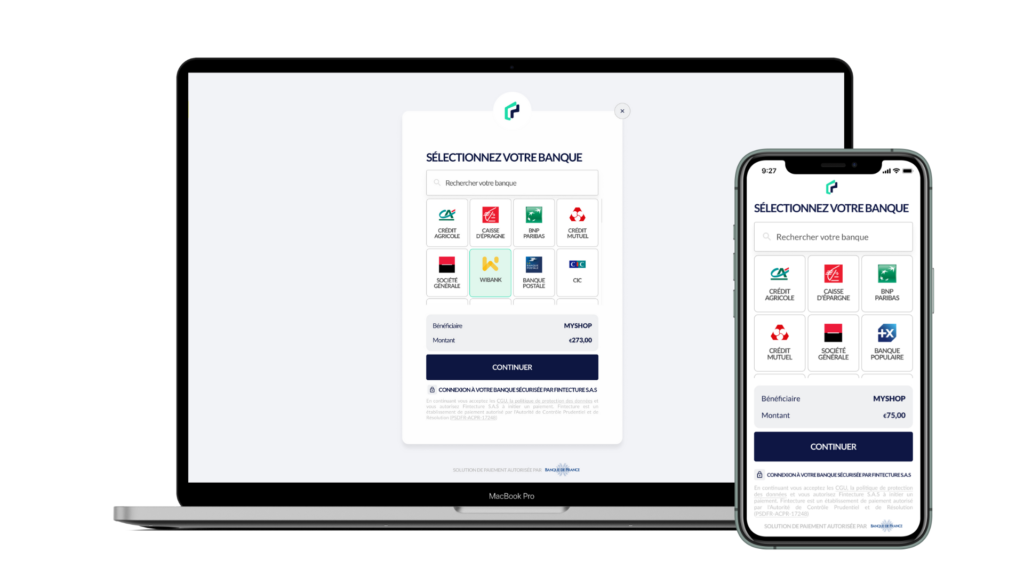
With Fintectureyour customers can pay simply and securely by bank transfer. They no longer need to enter your IBAN, the amount and the order reference. Everything is pre-filled. Payment is made online via the Fintecture payment platform.
Real-time information on the status of each payment
You no longer need to go through your bank to find out if you've been paid.
Whether your customer pays by Immediate Transfer or Smart Transfer, you'll find the status and history of each payment in your Fintecture back-office. If you use a CMS, order status is updated automatically. Our solutions are also available in various ERP and invoicing software packages (Odoo, Libeo, Pennylane...)
Simplified reconciliation
Regardless of the type of transfer chosen by your customer (Immediate Transfer or Smart Transfer), reconciliation takes place automatically and in real time.
For an immediate transfer, we use the order reference you send us (exactly the same as for a credit card payment).
For intelligent bank transfers, we create a personalized IBAN for each of your customers. This VIBAN enables us to identify and track the payment. Coupled with our on-board intelligence, it automates reconciliation, detecting initial orders, overpayments or underpayments.
Reduced DSO
Thanks to Immediate Transferyou'll be credited faster than with a conventional bank transfer. This reduces your payment times (by an average of 3 days) and secures your cash flow.
A multi-channel payment solution
Fintecture is a payment solution that meets every need:
- for e-commerce payments, the Checkout Solution solution integrates seamlessly into your online shopping experience;
- for remote orders (by telephone or e-mail), use the Payment Request and send payment requests by e-mail, SMS or include a payment link in your invoices;
- for in-store purchases, you generate a QR Code that allows you to cash in transfers directly at the point of sale.
Ultimately, the choice of a payment solution should not be based solely on price. It is of course an element to take into account, but the reflection must be global. It must include other criteria such as customer experience, conversion rate and the impact of payment processing on your teams.
Driven by the PSD2, the account-to-account payment is becoming as essential as the bank card. The proof is in the pudding: some of Fintecture's customers have done away with the "classic" bank transfer and are now sending all their transfers via our platform.


